Saturday, April 30, 2011

Alcaiceria


Upon arrival to Granada, while wandering through the streets surrounding Granada's cathedral, my friends and I came upon a little market, or alcaiceria, in the the old moorish quarter known as the Albaicin. The color and variation of all of the bins and baskets of spices, herbs, dried fruits, and teas were breathtakingly beautiful and the aromas were intoxicating sweet. 

The name of this market, the alcaiceria, literally means the "house of Caesar" in recognition of the fact that Emperor Justinian granted the Moors permission to sell silk. In fact, the Alpujarra mountain range near Granada, is famous as the location where silkworms feasted on the leaves of the Mulberry trees and from where the raw material was then transported by mules, to Granada and then woven and sold at the bazaar alongside ceramics, porcelains, and a whole host of other things imported from the Middle East.  

Today, while there remain a handful of authentic spice merchants, the rest of the market is now dominated by interesting, but cliché, souvenir shops that don’t actually sell many authentic local crafts. For example, most of the products were made in India including everything from Kaftans to jeweled slippers, skin drums to silver teapots, and colored tea glasses to leather bags. Despite this minor disappoinment, it was interesting to wander around the area where the old bazaar once stood before it was destroyed by a fire in 1843.

Sunday, April 24, 2011

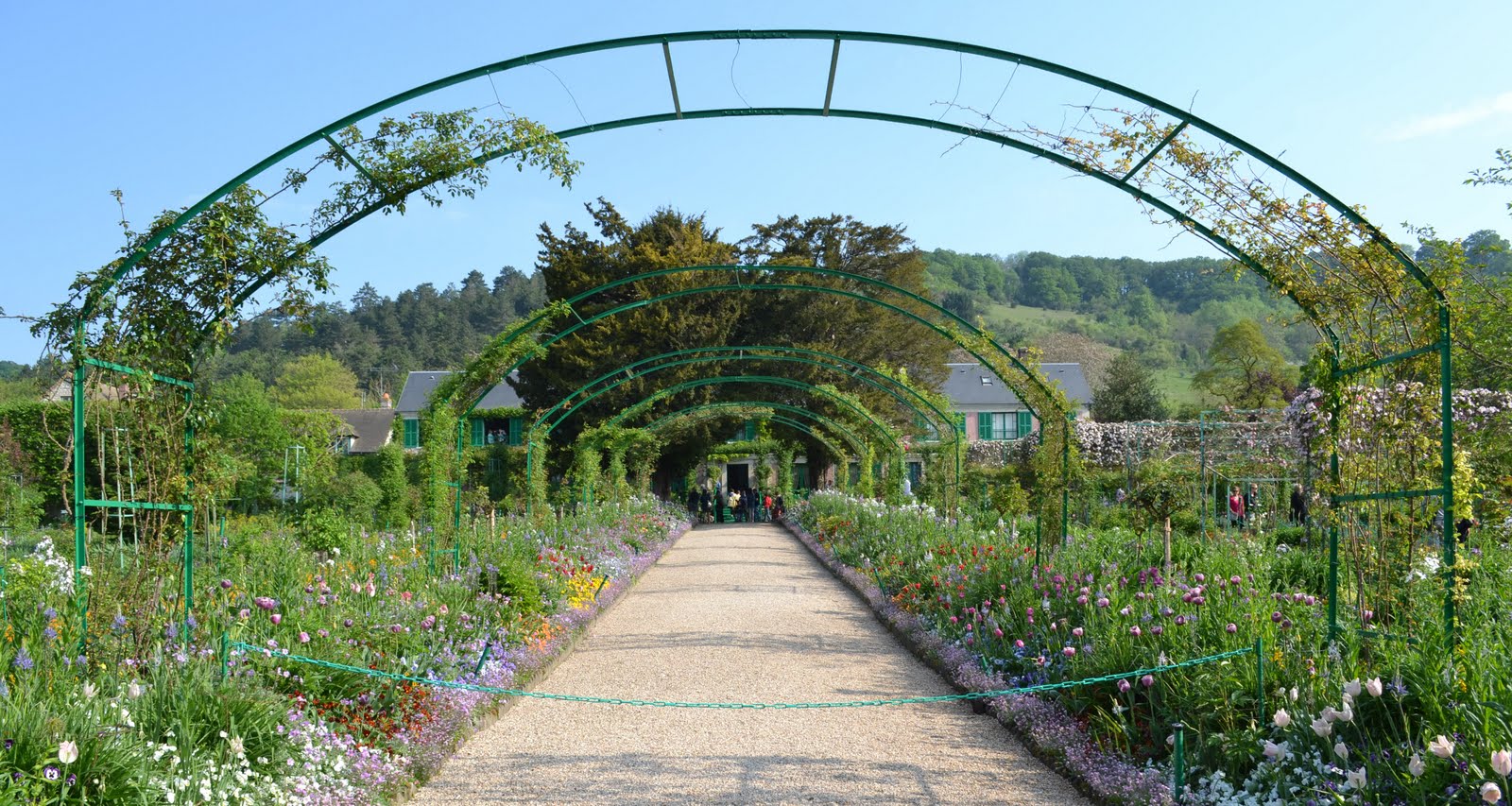
Giverny

I will eventually post blog entries on Granada, the Alhambra, and the Rodin Museum in Paris, however in honor of Easter Sunday, I decided to jump ahead and post these photos of my visit to Monet's Giverny. Enjoy!


Friday, April 22, 2011

Sevilla


After Barcelona, some of my friends and I continued on to Seville for a more relaxed vacation. We arrived on Sunday afternoon and after checking into the hotel we decided to go walk along the river. During our walk we saw the Golden Tower, riverboat cruise ships, gorgeous flowers, orange trees, the bull fighting arena, and colorful architecture. After a while, we became thirsty, so we stopped at a market nearby and got gelato, which we enjoyed on the banks of the river, coincidentally a very good place to people watch. It was interesting to note that the cultural mannerisms in Southern Spain were very much different than those in Barcelona and reminded me an awful lot of the culture in Central and South America.

After this break, we walked further and scoped out the location of the bus station, which we would need the next day to go to Granada. After this we found a good place for dinner, which surprisingly consisted on bruschetta, sandwich wraps with avocado, sun dried tomatoes, spinach, and sour cream, and a pitcher of Sex on a Beach cocktail. After that we headed back to the hotel to prepare for our early morning departure for our day trip to Granada (more on that later). 

On Monday, we returned in the late evening. Finally, on Tuesday, we really explored Seville, including the Cathedral, the Alcazaba, gelato snacks, and Tex Mex for dinner. My favorite parts of the day were the Treasury at the Cathedral and the Gardens at the Alcazaba. Overall, Seville had a much more relaxed environment and it was a joy to explore.


Saturday, April 16, 2011

The Magic Fountain of Montjuic

On my second night in Barcelona, I visited the Magic Fountain of Montjuïc with a friend and her sister. All the variations of colors and waterworks were breathtaking. I had never seen anything like it before. The Magic Fountain of Montjuïc is a fountain located in the Montjuïc neighborhood of Barcelona, below the Palau Nacional on the Montjuïc hill and near the Plaça d'Espanya. The fountain designed by Carles Buigas was constructed for the 1929 Barcelona International Exposition. The construction project utilized over 3,000 workers. The first show took place on May 19, 1929, the day before the start of the Exposition. The fountain was badly damaged in the Spanish Civil War and did not operate until 1955, after Buigas oversaw needed repairs. In the 1980s, music was incorporated with the light show and the fountain was completely restored prior to the 1992 Summer Olympics at Montjuïc.


Music: "Barcelona" by Freddie Mercury and Montserrat Caballé

Gaudi

Antoni Gaudi was a Catalan architect and the best-known representative of Catalan Modernism, similar to the French Art-Nouveau style of architecture. Gaudi’s inspiration beyond his style can be found in a variety of different art and architecture including oriental arts from India, Persia, and Japan and the French neo-gothic movement, with which he incorporated his own elements including naturalistic forms based on places he had visited in Spain. All these influences are reflected in Gaudi’s work including the use of geometrical forms such as the hyperbolic paraboloid, the hyperboloid, the helicoid and the cone, as well as his signature catenary curve. In addition to stone forms, stain glass, iron, and carpentry, Gaudi is also well know for his incorporation of ceramic tiles, which adorn many of his buildings, adding an often forgotten dimension to his buildings - the use of color. The combination of all these elements in Gaudi's work give the viewer a truly breathtaking visual experience. 

During my trip to Barcelona, I visited two of Gaudi’s masterpieces—Sagrada Família and Park Güell —and saw a couple others in passing. On my first full day in Barcelona, we visited the Gothic Quarter and the Picasso Museum, got lunch, and then made our way to the Sagrada Família . This magnificent structure has been under construction since 1882 and it's not expected to be completed for another 30 to 80 years, although the current estimated date of completion is 2026, the hundredth anniversary of Gaudi’s Death. Visiting Sagrada Família I truly didn’t know what to expect. I had seen pictures, but I had never been able to really conceptualize what exactly it looked like. When I stepped out of the metro and turned around to see the structure for the first time, however, I admit, I was blown away. I had never seen anything like it in my life. The form, the color, the detail, everything was so different. Walking inside made me feel like I was entering another world reminiscent of the castle in The Little Mermaid.
 

Western Nativity Facade
Eastern Glory Facade

Helicoid Columns Facing North

Hyperboloid vault
Hyperbolic Paraboloid  Windows
Ceiling Above the High Altar

Vignette above the Nativity Façade Main Portal
After Sagrada Familia, we visited Park Güell , which was also designed by Gaudi. I had seen photographs of the park as well as all the souvenir mosaic figurines in the tourist shops, but like Sagrada Familia I was once again surprised by what I discovered. After hiking up a giant hill, we arrived at the top of the park with views of the entire city, including the Sagrada Familia. From there we descended down towards the part that Gaudi designed. When we got there the size and detail of mosaic bench, the longest in the world, was astounding. After taking a break on the bench we decided to descend a little more and discovered a very cool colonnade of columns that when inside resembled being inside a capsizing wave. Next we descended some more underneath the bench overhang and discovered more mosaics that lead us to the entrance to the park and the famous dragon statue. Overall, I loved the combination of innovative structural forms at the park and incorporation of detailed color mosaics.

The Longest Bench in the World
Pavilion 1
Pavilion 2 With 4-Armed Cross

Colonnaded Pathway
The Dragon
Park Entrance
Finally, on our last day in Barcelona, after navigating through road construction and a marathon (I can now halfheartedly say I have run in a marathon), we made it to the airport shuttle and were just settling in when we unexpectedly drove by the Casa Batlló. While I don’t know much about this building, I found it aesthetically beautiful and a perfect end to my visit to Barcelona.

Casa Batlló

Comida Español en Barcelona

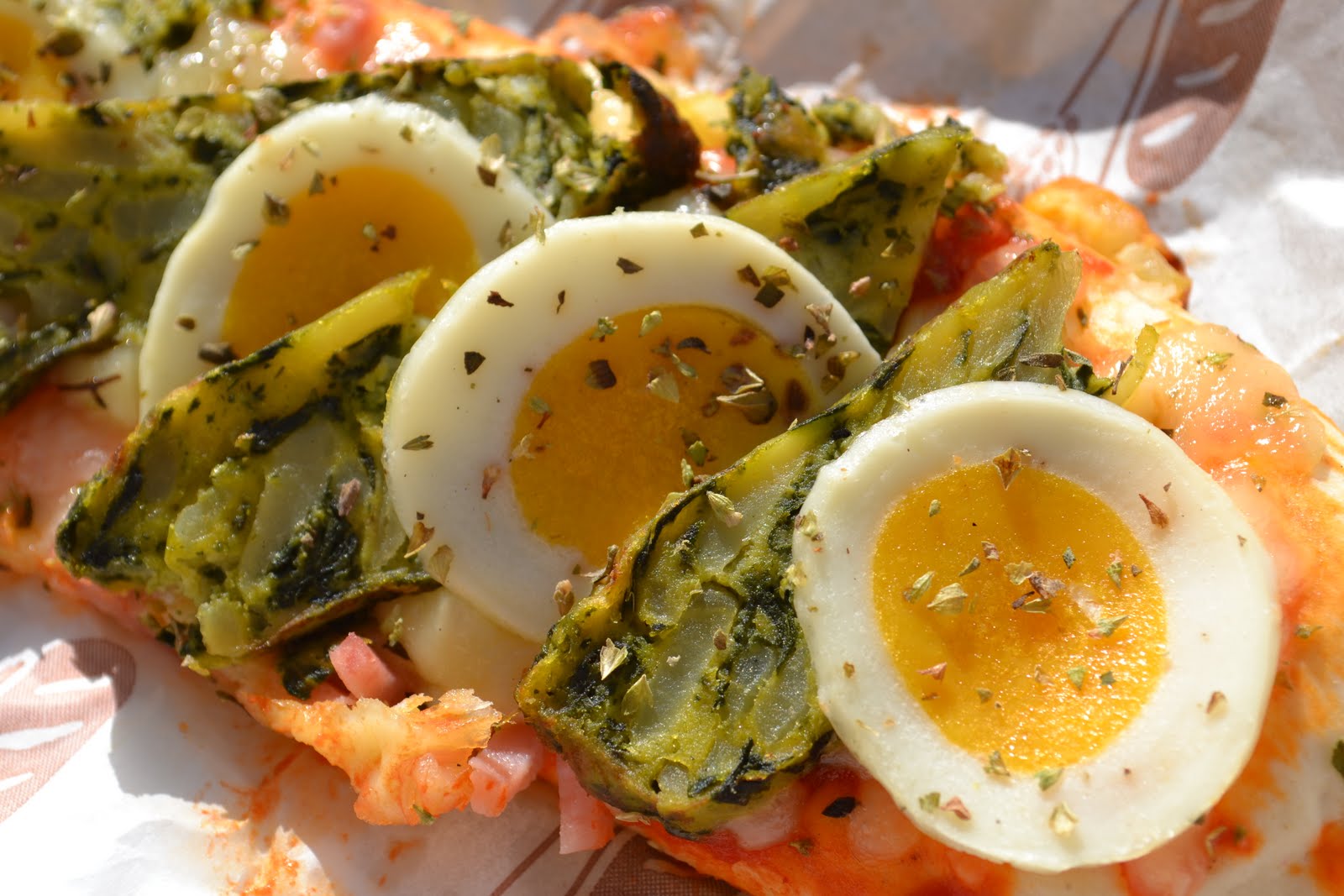
During a recent trip to Spain during my spring vacation, I was fortunate enough to try a whole host of new food in Barcelona. The first night, we followed the suggestion of our hotel concierge and went out for tapas at a restaurant a couple blocks away called the Ciudad Condal. When we got there we knew it had to be good because there was a half hour wait even though we were eating early by Spanish standards (8:30pm).  Since there were four of us, we decided to split 8 tapas dishes amongst ourselves and some of us had Sangria, a type of wine fruit punch. Afterward, we stopped by Amorino and got some gellato for dessert. The next morning we bought breakfast at a local Panadería, which we enjoyed on the rooftop terrace of our hotel. I am not entirely sure what I ordered, but it was a delicious breakfast pizza with hard boiled eggs and a type of Spanish omelet with tomato sauce and cheese. I also tried the Spanish Bi-Frutas drink for the first time, and it was an amazingly delicious blend of fruit and milk, although I think it tasted mainly like peach juice. For lunch that same day, we visited a Spanish eatery on La Rambla, where some of us split tapas, paella, and sangria. Finally, for dinner we revisited the Tapas place from the night before, where we all tried a couple new dishes. Overall, Barcelona truly provided a  culinary feast. I can't wait to try to make some of the dishes when I return home this summer. For now, however, pictures while have to suffice. Enjoy and buen provecho!

Leftovers from Prawns
Roasted Red Peppers Stuffed with Pured Cod Covered in Cheese
Roasted Peppers and Goat Cheese
Potatoes with Spicy Sauce and Mayonnaise 
Fried Squid
Spanish Omelet 
Grilled Mushrooms and Asparagus
Sangria
Amarino Gellato
Breakfast Pizza
Bi-Frutas Milk/Fruit Juice
Tapas - Starting Upper Left: Cod, Crab, Egg, Ham & Cheese
Paella
Fried Artichokes
Fries with Spicy Sauce, Mayonnaise, and Fried Eggs

Thursday, April 7, 2011

Le Plus Cool Pâtisserie à Paris


Chez Bagato is by far the coolest shop I have found in Paris. Not only do they sell pastries and candies, but they also have classes (I learned how to make a Tarte Citron last month) and the décor is beyond cute. Overall, I wish I could have everything they sell, but I think I might have trouble fitting it in my suitcase!